Boiling Point And Pressure Relationship

Boiling point and pressure relationship
The boiling point of water is inversely proportional to the atmospheric pressure.
Why does boiling point decrease with pressure?
Lowering the pressure lowers the boiling point because the molecules need less speed to escape. The low atmospheric pressure on high mountains lowers the boiling point to such an extent that water cannot get hot enough to boil eggs satisfactorily.
What happens to the boiling point when pressure increases?
The boiling point of a liquid increases with increase in pressure. Since a liquid vaporises when molecules move faster and farther apart but while increasing pressure, you are applying an external force to hold molecules closer to each other.
How boiling point depends upon pressure?
The boiling point of the liquid depends upon the pressure of the surrounding. When the liquid is at high pressure, it has a higher boiling point than the boiling point at normal atmospheric pressure. The boiling point of different liquids is different for a given pressure.
Is it true that water boils at higher temperature at higher pressure?
At higher pressures (such as the pressure generated in a pressure cooker), the temperature must be higher before the vapor pressure reaches the surrounding pressure, so water under pressure boils at a higher temperature.
Does high pressure mean hotter?
High pressure systems can be cold or warm, humid or dry. The origin of a high-pressure region determines its weather characteristics. If a high-pressure system moves into Wisconsin from the south during the summer, the weather is usually warm and clear.
Why does high pressure make it hotter?
When air sinks from high in the atmosphere to the lower levels it warms up and dries out. This is because air at the top of the atmosphere is less dense. If we take that air lower to where the density is greater, it gets compressed. This acts to warm up the air (moving the molecules faster).
Does high pressure make it hotter?
Weather Indicators An area of higher pressure, H, is called a high-pressure system and generally has a denser air mass where air temperature is cool. These systems often bring warmer temperatures and dry weather. A low-pressure system, L, is an area of less dense air with warmer air temperatures.
Does low pressure equal high temperature?
If air pressure decreases, the temperature decreases. It also explains why air gets colder at higher altitudes, where pressure is lower.
What is relationship between temperature and pressure?
Conclusion. The pressure of a given amount of gas is directly proportional to the temperature at a given volume. When the temperature of a system goes up, the pressure also goes up, and vice versa. The relationship between pressure and temperature of a gas is stated by the Gay-Lussac's law.
Is low pressure hot or cold?
cold air masses are associated with lower pressure at a given height in upper levels of the atmosphere (think of the atmosphere being compressed). So troughs in the upper level wind pattern are associated with cold air masses, and ridges with warm air masses.
Does high pressure make it cold or hot?
Cold air is more dense, therefore it has a higher pressure. Warm air is less dense and has a lower pressure associated with it. As the sun heats the ground, the air near the ground warms.
How does pressure increase temperature?
The piston coming towards the molecules during compression increases the momentum of molecuels and thus the kinetic energy. The molecules become faster and the temperature consequently rises!
What happens to water when pressure increases?
If the pressure above a liquid is increased sufficiently, the liquid forms a solid. If the pressure above a liquid is decreased sufficiently, the liquid forms a gas.
Why in high temperature there is low pressure?
Areas of high and low pressure are caused by ascending and descending air. As air warms it ascends, leading to low pressure at the surface. As air cools it descends, leading to high pressure at the surface.
What increases heat and decreases pressure?
When a liquid is converted to a gas by increasing the heat and decreasing the pressure it is known as vaporisation.
What is the relationship between pressure and temperature of water?
A useful thumb rule for water is that pressure in a water-solid system will increase about 100 psi for every 1 F increase in temperature.
Why temperature and pressure are inversely related?
When the temperature increases and the air start to rise upwards. creating a low-pressure area, but when the temperature decreases, the air starts to sink downwards creating a high-pressure area on the land surface. So, the temperature and pressure are inversely related to one another.
Why temperature is inversely proportional to pressure?
It is a rule that as we go up,the air pressure decreases. And as we know,in high temperature the air is in low pressure . But as we go up the air becomes cold not hot.So whyvis that,as we go up the air pressure decreases.
Is hot air high or low pressure?
Warm air is thus lighter (less dense) than cold air and consequently exerts less pressure.
13 Boiling point and pressure relationship Images
Mercury has a freezing point of and a boiling point both the lowest of

Simple Distillation Distillation Distillation process Simple

Pressure Temperature Chart National Refrigerants Inc Chart

61B StepbyStep Procedures for Boiling Point Determination
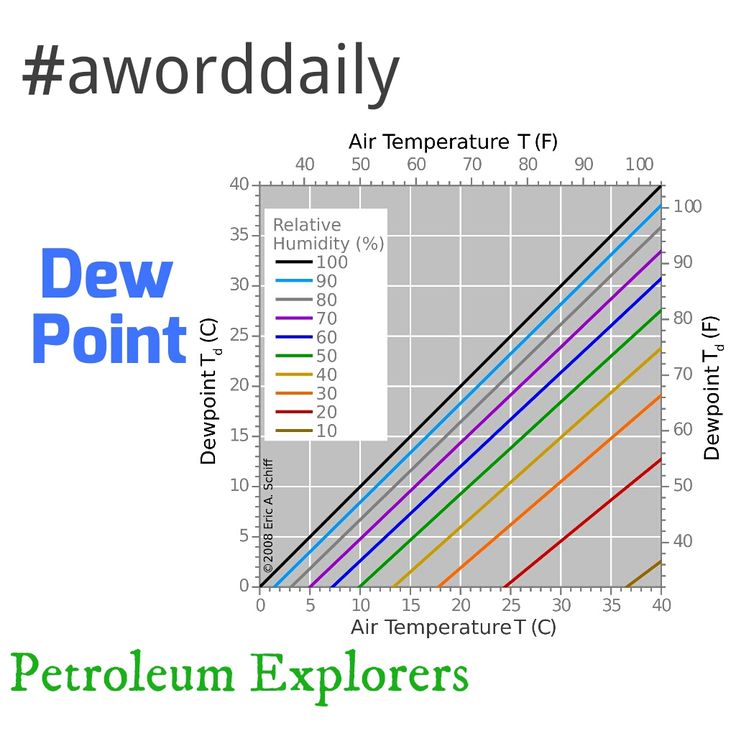
aworddaily Dew Point The pressure at which the first condensate

Boiling Point by Mireldy via Behance Web Design Graphic Design

KOTC Boiling Point Fightcard

Pin on cooking tips helpers reference

Atmospheric pressure and boiling point of water table Science and

Bridging Social Distancing using Common Neutral Ground Social

Here are a few more anchor charts for physical science from my science

Pin on refrigeracin

Post a Comment for "Boiling Point And Pressure Relationship"